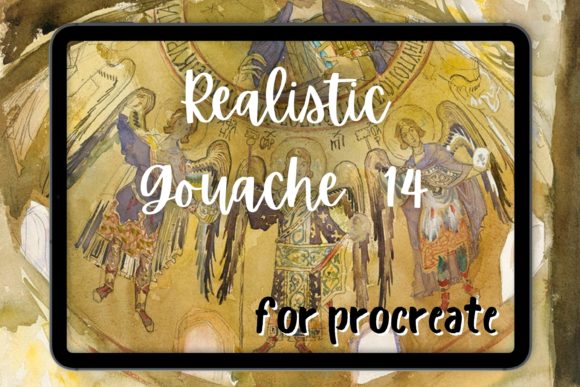
Authentic Digital Painting with Procreate Gouache Brush 14
For digital artists who miss the tactile resistance of real paper and paint, the transition from traditional media to a tablet can sometimes feel sterile. You lose the drag of the bristles, the way colors mix on the palette, and the slight imperfections that give a painting its soul. This is exactly the problem the Procreate Gouache Brush 14 Smooth Blender was designed to solve. It is not merely a digital tool; it is a simulation of physics and chemistry, built to bring the warmth of the studio to your iPad.
The core of this brush’s appeal lies in its construction. It was developed using high-resolution scans of real-life brush strokes, capturing the specific texture of gouache as it drags across a textured surface. Unlike standard digital brushes that rely on smooth, synthetic gradients, this tool offers a "grainy" and substantial feel. When you apply pressure, you see the density of the pigment change. When you blend, you get the characteristic muddying of colors that occurs when water and pigment interact physically. It transforms the digital canvas from a glass screen into a piece of cold-pressed paper.
The Personality of the Stroke: Gritty, Opaque, and Alive
Gouache is beloved by illustrators for its opacity and matte finish. The Procreate Gouache Brush 14 Smooth Blender replicates this perfectly. It creates strokes that feel heavy and deliberate. You can build up layers of paint just as you would on a canvas, covering previous marks without the translucency often associated with watercolor or standard digital brushes. This makes it an exceptional choice for creating bold, graphic illustrations or adding rich texture to background elements.
However, the true star of this set is the Smooth Blender No Color variant. In traditional painting, a blender is used to soften edges and mix wet paint without adding new pigment. This digital counterpart does exactly that. It allows you to push paint around the canvas, creating soft gradients and atmospheric effects without introducing unwanted color noise. It is the tool you need to soften a harsh shadow, blend a sunset sky, or create that dreamy, impressionistic look where objects feel present but not rigidly defined. It gives your work a "painterly" quality that is difficult to achieve with standard smudge tools.
Strategic Applications for Modern Creators
While this brush is an obvious asset for fine art, its utility extends far beyond the canvas. For designers and creative professionals, the Procreate Gouache Brush 14 offers a way to break free from the "digital perfection" that can make branding feel cold. Here is how you can apply it across different mediums:
- Brand Identity & Logo Design: If you are building a brand that needs to feel organic, artisanal, or human, hand-painted elements are invaluable. Use this brush to create unique textures for backgrounds or to paint custom logomarks. A logo rendered in gouache suggests craftsmanship and care, distinguishing a brand from the vector-heavy, sterile competitors in the market.
- Editorial & Book Design: In publishing, especially for cookbooks, lifestyle magazines, or children's literature, texture adds depth. You can use the brush to paint borders, spot illustrations, or even custom drop caps that stand out against clean serif or sans-serif typography.
- Social Media & Marketing: The scroll-stopping power of social media often lies in uniqueness. Instead of using generic stock photos, marketers can create custom header images or story highlights using this brush. The tactile texture catches the eye, making the content feel more valuable and engaging than a standard graphic.
- Textile & Pattern Design: The opacity of gouache makes it perfect for creating seamless patterns. The brush strokes retain their character even when scaled, allowing crafters and designers to create repeat patterns for fabrics, wallpaper, or stationery that look hand-painted.
Integrating Texture into Your Workflow
Adopting a new brush style requires a shift in technique. To get the most out of the Procreate Gouache Brush 14 Smooth Blender, you need to think like a traditional painter. First, consider your color palette. Gouache looks best when you allow colors to mix slightly. Instead of using a perfectly flat fill, build up your colors in layers. Use the blender to mix a shadow color into your base color directly on the canvas; this creates a cohesive visual harmony that flat coloring cannot match.
When pairing this style with typography, contrast is key. Because the brush strokes are organic, textured, and irregular, they pair exceptionally well with clean, geometric typefaces. Try using a modern sans-serif font for your headlines against a gouache-painted background. The clash between the digital precision of the text and the analog roughness of the paint creates a sophisticated, contemporary aesthetic.
Technical Considerations and Evaluation
Before committing to a textured workflow, it is important to evaluate how these assets fit into your specific project pipeline. While the Procreate Gouache Brush excels in creating atmosphere, it may not be suitable for fine, small-scale text or intricate line work where clarity is paramount. Always test your brushes at the final output size. A stroke that looks beautiful on a 12-inch iPad screen might turn into a muddy blob when printed on a small business card.
Furthermore, ensure you understand the licensing of your design assets. If you are using these brushes for client work or commercial products, verify that the license permits commercial use. Most premium brush sets allow this, but it is a professional standard to double-check. Treat these brushes not just as fun tools, but as professional-grade assets that contribute to your intellectual property.
Ultimately, the Procreate Gouache Brush 14 Smooth Blender is about reclaiming the joy of creation. It invites you to slow down, embrace imperfection, and add a layer of humanity to your digital work. Whether you are a hobbyist painting for relaxation or a brand strategist looking to add texture to a campaign, this tool bridges the gap between the screen and the canvas.